 ≥99%
≥99%
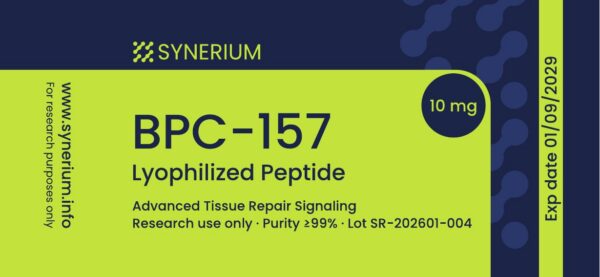
BPC-157
10 mgLyophilized Peptide
Advanced Tissue Repair Signaling


Lyophilized Peptide
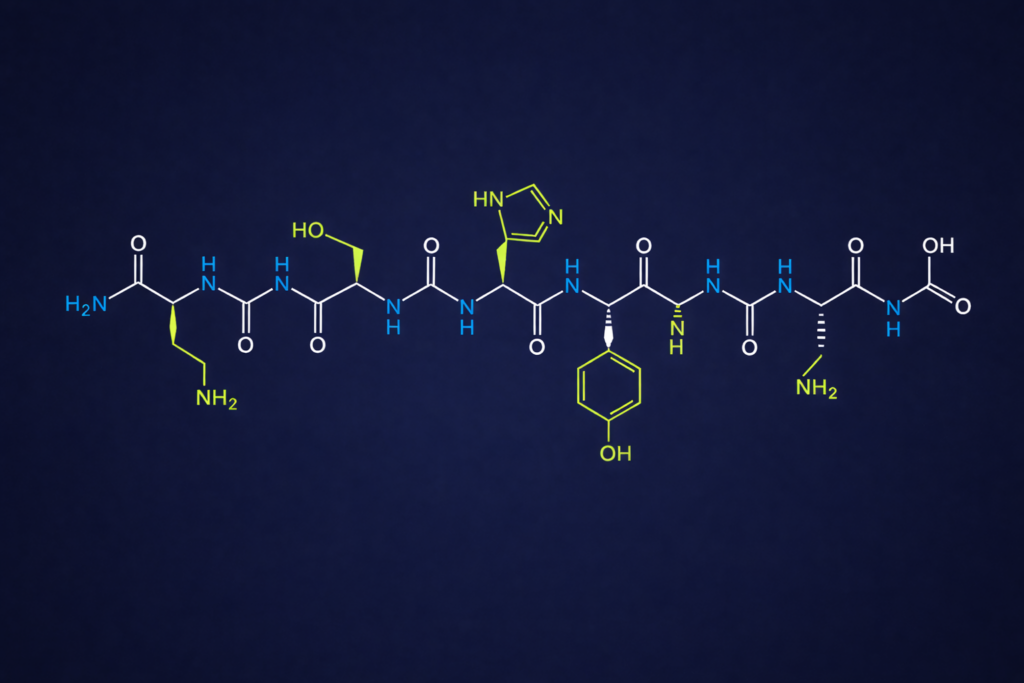
Sequence
Gly-Glu-Pro-Pro-Pro-Gly-Lys-Pro-Ala-Asp-Asp-Ala-Gly-Leu-Val
Purity
≥99%
Form
Lyophilized white powder
Amount
5 mg
Molecular Weight
1419.53 Da
Storage
Store at 2-8°C (refrigerated). Protect from light.
Lot Number
SYN-36e2rtu
Purity
≥99%
Form
Lyophilized white powder
Amount
5 mg
Molecular Weight
1419.53 Da
Storage
Store at 2-8°C (refrigerated). Protect from light.
Lot Number
SYN-36e2rtu
Research overview
BPC-157 (Body Protection Compound-157) is a pentadecapeptide composed of 15 amino acids, derived from a protective protein found in human gastric juice. It has been extensively studied in over 100 preclinical research papers for its remarkable role in tissue repair signaling, including tendon-to-bone healing, wound healing, gastrointestinal mucosal integrity, and nerve regeneration. Research indicates BPC-157 modulates the nitric oxide (NO) system through both the NO synthase and cyclooxygenase-2 pathways, promotes angiogenesis via VEGFR2 upregulation, and influences growth factor expression including EGF, FGF, and TGF-β. In gastrointestinal models, BPC-157 has demonstrated cytoprotective effects against ethanol-induced, NSAID-induced, and stress-induced gastric lesions. Musculoskeletal research has shown accelerated healing of transected tendons, crushed muscles, and bone fractures in animal models. Additionally, studies have explored its neuroprotective properties, demonstrating potential benefits in peripheral nerve injury, traumatic brain injury, and spinal cord injury models. BPC-157 has also been investigated for its hepatoprotective properties and its ability to counteract the toxic effects of various pharmacological agents. This 5 mg variant is formulated for standard in-vitro research protocols and dose-finding studies.
Research Use Only: This product is intended strictly for in-vitro research and laboratory use. It is not intended for human consumption, veterinary use, or diagnostic purposes. Handle only in accordance with applicable laboratory safety guidelines.