
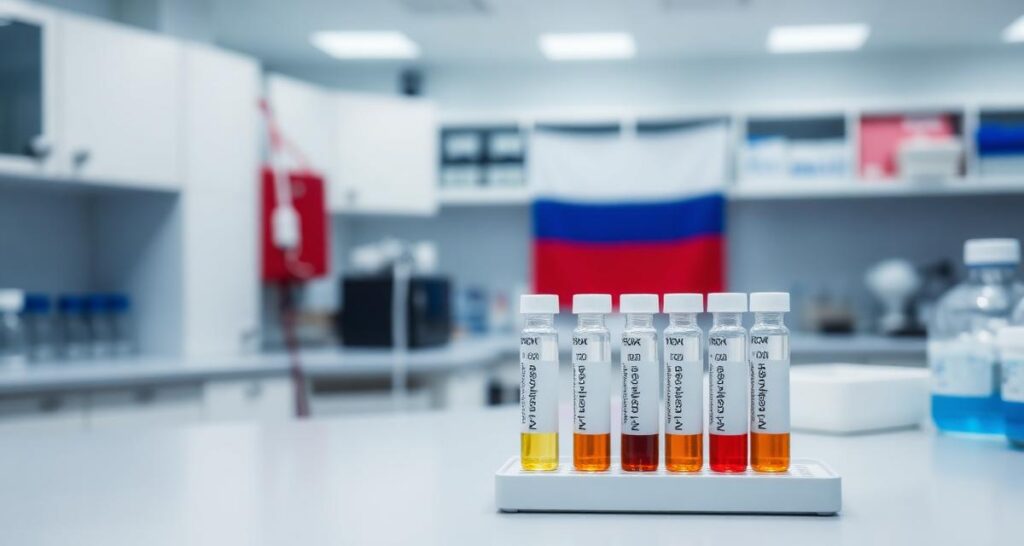
Research Peptides in Poland: Regulations, Suppliers, and Laboratory Guidelines
A comprehensive guide for researchers in Poland — covering the regulatory framework for research peptides, how to source high-purity compounds within the EU, and practical considerations for Polish laboratories and academic institutions.
The Growing Peptide Research Landscape in Poland
Poland has emerged as one of Central Europe's most dynamic centers for biomedical research, driven by substantial EU funding, a rapidly modernizing academic infrastructure, and a growing pharmaceutical and biotechnology sector. Polish research institutions — from the Polish Academy of Sciences (Polska Akademia Nauk, PAN) and the Jagiellonian University in Kraków to the Medical University of Warsaw and the Wrocław University of Science and Technology — are increasingly active in peptide-related research across pharmacology, oncology, neuroscience, and regenerative medicine.
As an EU member state, Poland benefits from the free movement of goods within the European Single Market, which significantly simplifies the procurement of research peptides from EU-based suppliers. Polish researchers can order peptides from anywhere in the EU without customs clearance, import duties, or complex paperwork — receiving deliveries within 1–3 business days via standard tracked shipping.
This guide provides Polish researchers with everything they need to know about sourcing, importing, storing, and using research peptides in compliance with both EU-wide and Polish-specific regulations.
Regulatory Framework for Research Peptides in Poland
The regulation of research chemicals in Poland operates within the EU regulatory framework, supplemented by national legislation that implements and sometimes extends EU requirements.
- EU REACH Regulation — As in all EU member states, the REACH regulation governs the registration, evaluation, and authorization of chemical substances in Poland. Research peptides used in small quantities for scientific research and development are generally exempt from full REACH registration requirements, but suppliers must comply with classification, labeling, and Safety Data Sheet (SDS) obligations.
- Polish Pharmaceutical Law (Prawo farmaceutyczne) — Poland's pharmaceutical legislation, aligned with EU Directive 2001/83/EC, strictly distinguishes between medicinal products and research chemicals. Research peptides are not classified as medicinal products and must not be marketed, sold, or used for therapeutic purposes. All products must be clearly labeled as intended for research use only (wyłącznie do celów badawczych).
- Chemical Substances Act (Ustawa o substancjach chemicznych i ich mieszaninach) — Poland's implementation of EU chemicals legislation establishes national requirements for the handling, storage, labeling, and disposal of chemical substances, including synthetic peptides used in research. The Chief Sanitary Inspector (Główny Inspektor Sanitarny) oversees enforcement.
- Institutional requirements — Polish universities and research institutes typically require that chemical purchases, including research peptides, go through institutional procurement procedures. Risk assessments and standard operating procedures must be in place before working with new chemical substances, in accordance with Polish occupational health and safety regulations (Kodeks pracy and related ordinances).
Sourcing Research Peptides in Poland
Polish researchers benefit from Poland's EU membership, which provides access to the entire European supply network without trade barriers.
- EU-based suppliers — The most practical option for Polish laboratories. Orders from EU-based peptide suppliers ship customs-free under Single Market rules, with typical delivery times of 1–3 business days to major Polish cities including Warsaw, Kraków, Wrocław, Poznań, Gdańsk, and Łódź. EU suppliers operate under the same regulatory framework, ensuring consistent quality standards and documentation.
- Domestic Polish suppliers — A limited number of peptide suppliers operate within Poland, primarily serving the academic sector. While offering Polish-language support and potentially faster local delivery, the domestic market is smaller compared to the broader EU supply network.
- Non-EU suppliers — Ordering from outside the EU (USA, UK post-Brexit, China) introduces customs clearance requirements at Polish border control points, potential import duties, and VAT assessment at Poland's standard rate of 23%. Shipments may be subject to inspection by the Polish Customs Service (Krajowa Administracja Skarbowa), and researchers must ensure complete documentation accompanies each shipment.
- Quality verification — Regardless of origin, all research peptides should be accompanied by batch-specific Certificates of Analysis documenting HPLC purity and mass spectrometry identity confirmation. Polish research institutions increasingly require this documentation for internal quality management and audit purposes.
Note: Synerium delivers to all major Polish cities from within the EU — no customs, no duties, no delays. Standard tracked delivery reaches most Polish addresses within 1–2 business days with temperature-controlled packaging.
Key Research Institutions Using Peptides in Poland
Poland's research infrastructure has grown significantly through EU Structural Funds and Horizon Europe participation, creating world-class facilities that drive demand for high-quality research peptides.
The Polish Academy of Sciences (PAN), with its network of research institutes including the Nencki Institute of Experimental Biology and the Institute of Pharmacology, is a major consumer of research peptides for neuroscience and pharmacology studies. The Jagiellonian University's Faculty of Chemistry and Faculty of Medicine, the Medical University of Warsaw, and the University of Warsaw's Centre of New Technologies (CeNT) are all active in peptide-related research.
Poland's emerging biotechnology sector, concentrated in clusters around Warsaw, Kraków, and Wrocław, also generates growing demand for research-grade peptides in drug discovery and preclinical development. Companies operating in Polish Special Economic Zones and technology parks are increasingly engaged in peptide-based research programs.
The National Science Centre (Narodowe Centrum Nauki, NCN) and the National Centre for Research and Development (NCBR) fund numerous research projects that require high-purity peptides, making reliable supply chains essential for Polish research groups.
Storage and Laboratory Safety in Polish Facilities
Polish laboratory safety regulations align with EU directives on chemical safety, implemented through national occupational health and safety legislation.
- Risk assessment — Polish regulations require a written risk assessment (ocena ryzyka zawodowego) for work involving chemical substances. For research peptides, this typically addresses skin sensitization, proper PPE requirements, and safe handling procedures.
- Storage requirements — Lyophilized peptides should be stored at -20°C or below in dedicated laboratory freezers with temperature monitoring and access control. Storage areas must be documented in the laboratory's chemical inventory (rejestr substancji chemicznych).
- Personal protective equipment — Standard PPE for peptide handling includes nitrile gloves, laboratory coat, and safety glasses, in accordance with EU PPE Regulation 2016/425.
- Waste disposal — Chemical waste from peptide research must be disposed of through authorized waste management operators (firmy zajmujące się utylizacją odpadów chemicznych) in compliance with Polish waste management law (Ustawa o odpadach).
- Documentation — Polish laboratories must maintain records of all chemical substances used, including purchase records, Certificates of Analysis, Safety Data Sheets, and disposal documentation. These records may be subject to inspection by the State Sanitary Inspection (Państwowa Inspekcja Sanitarna).
Shipping and Delivery to Poland
Efficient and reliable delivery is essential for maintaining peptide integrity and supporting uninterrupted research programs.
- Intra-EU shipping — Orders from EU-based suppliers arrive customs-free with no additional paperwork or duties. This is the fastest and most cost-effective shipping method for Polish researchers.
- Temperature-controlled packaging — Reputable suppliers ship peptides with cold packs to maintain appropriate temperatures throughout transit, particularly important during Poland's warm summer months (June–August).
- Tracked delivery — All shipments should include tracking capabilities. Major courier services operating in Poland (DPD, DHL, UPS, InPost) provide reliable next-day or two-day delivery to institutional addresses.
- Delivery to institutional addresses — Most suppliers can deliver directly to university departments, research institute laboratories, and company R&D facilities. Some institutions require deliveries to a central receiving department (kancelaria or magazyn).
- Delivery times — From EU-based suppliers, standard delivery to Warsaw, Kraków, Wrocław, and other major cities takes 1–2 business days. Smaller cities and rural areas may require an additional day.
Quality Standards and Documentation
Polish research institutions maintain high quality standards, increasingly aligned with international best practices through participation in EU research networks and accreditation programs.
Every research peptide order should include batch-specific documentation: Certificate of Analysis with HPLC purity data (≥95% for standard grade, ≥98% for premium), mass spectrometry identity confirmation, physical appearance description, and storage recommendations. This documentation supports experimental reproducibility, institutional compliance, and reporting requirements for NCN and NCBR-funded projects.
At Synerium, we provide comprehensive batch-specific Certificates of Analysis with every order shipped to Poland, along with Safety Data Sheets and additional documentation upon request. Our products meet the quality standards expected by Poland's leading research institutions and are intended strictly for laboratory research use — not for human consumption.
Explore Our Research Catalog
All Synerium products are independently tested with full Certificates of Analysis available.
View Products